The First 60 Minutes After Water Damage in Hackensack: What to Do
When a pipe bursts or flooding hits your Hackensack home, every minute counts. Here's exactly what to do in the first hour to minimize damage and protect your claim.

Nick Hartman
Field Manager · Bergen Water Restore
Stop the Source First
The single most important action in the first 60 minutes is cutting off the water supply. For a burst pipe, locate your main shutoff valve — in most Hackensack homes it's in the basement utility room or near the front foundation wall. Turn it clockwise until it stops.
If the flooding is from a storm or sewer backup, don't touch standing water until you've confirmed the electricity is off at the breaker panel. Water and live circuits are a fatal combination.
- Main shutoff valve: basement, utility room, or front foundation wall
- Storm flooding: breaker panel off before entering
- Sewer backup: treat as biohazard — don't use any drains
Document Everything Before Touching Anything
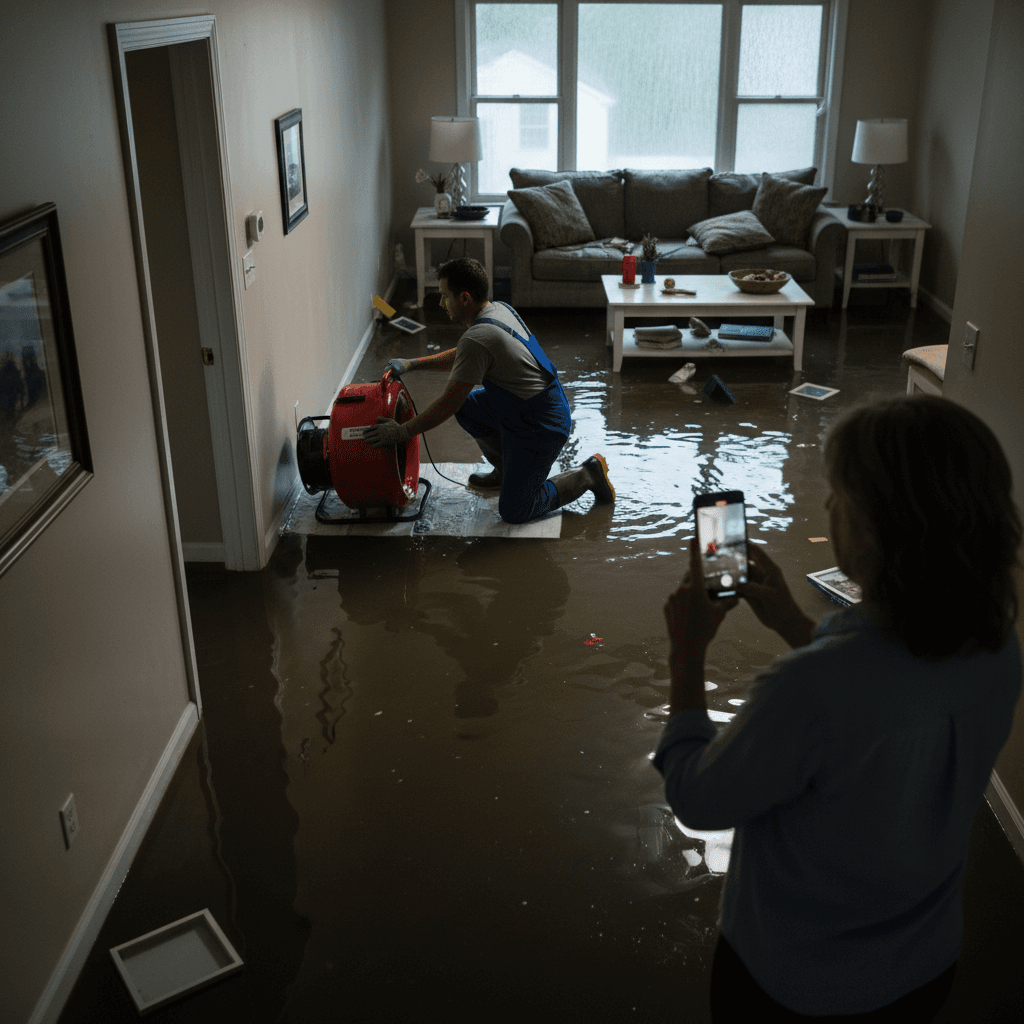
Your insurance claim lives or dies on documentation. Before you move a single piece of furniture, take a 360-degree video walkthrough of every affected room. Open cabinets, closets, and pantries — water travels farther than it looks.
Bergen County homeowners consistently lose claim value by cleaning up before documenting. Adjusters need to see the full scope of damage. Your smartphone video is legally admissible evidence.
- Video first, cleanup second — always
- Capture water lines on walls and floors
- Photograph serial numbers on damaged appliances
- Note the time and date on every photo/video
Call Your Restoration Company Before Your Insurance
Most Hackensack homeowners instinctively call their insurance company first. But the smarter move is calling a restoration company like Bergen Water Restore first. Here's why: a certified technician can be on site within 45 minutes, start mitigation immediately, and provide professional documentation that strengthens your claim.
Insurance adjusters in New Jersey typically take 24–72 hours to arrive. By that time, secondary damage — mold growth, structural warping, subfloor rot — has already begun. Every hour of delay adds cost that may not be fully covered.
Move Valuables to High Ground
While waiting for the restoration crew, move what you safely can. Electronics, documents, medications, and irreplaceable items should go upstairs or to a dry room. Use aluminum foil under furniture legs to prevent staining on wet carpet.
Do not use a household vacuum or shop vac on sewage-contaminated water — this aerosolizes dangerous bacteria. For clean water flooding, you can begin extracting with a wet-vac if it's safe to stand in.
- Documents, passports, financial records — priority 1
- Electronics unplugged and moved before touching water
- Aluminum foil under furniture legs on wet carpet
- Never vacuum sewage water — biohazard risk
What to Expect When the Crew Arrives
A Bergen Water Restore team arriving at a Hackensack property will immediately conduct a moisture mapping assessment using thermal imaging and pin-type moisture meters. This establishes a scientific baseline for your claim and identifies hidden water pockets behind walls and under floors.
Industrial extractors and air movers are deployed within the first 30 minutes of arrival. The goal in the first 24 hours is extraction and containment — preventing the water from spreading to unaffected areas.
Need help right now?
24/7 emergency response across Bergen County. We arrive in 45 minutes or less.
Frequently Asked Questions
Everything you need to know
How quickly does mold start growing after water damage in NJ?
Mold can begin growing in as little as 24–48 hours in New Jersey's humid climate. This is why immediate extraction and drying is critical — especially in Hackensack where summer humidity already creates favorable mold conditions.
Will my homeowner's insurance cover water damage in Hackensack?
Standard homeowner's insurance in New Jersey covers sudden and accidental water damage (burst pipes, appliance failures) but typically excludes flooding from outside the home. Flood damage requires separate NFIP or private flood insurance. Bergen Water Restore works directly with all major NJ carriers.
How long does water damage restoration take?
A typical water damage job in a Bergen County home takes 3–5 days for drying and extraction. Full reconstruction (drywall, flooring, painting) can add 1–3 weeks depending on scope. We provide a written timeline estimate at no charge.
Is it safe to stay in my Hackensack home during restoration?
For minor water damage affecting one room, it's usually safe to remain in the home. For sewage backups, extensive mold, or whole-floor flooding, we recommend temporary relocation. Your insurance's additional living expenses (ALE) coverage may reimburse hotel costs.