7 Mold Warning Signs Bergen County Homeowners Always Miss
Mold in Bergen County homes rarely looks like the black patches you see online. These are the subtle signs most homeowners overlook until it's a five-figure remediation job.

Jona Cohen
Customer Representative · Bergen Water Restore
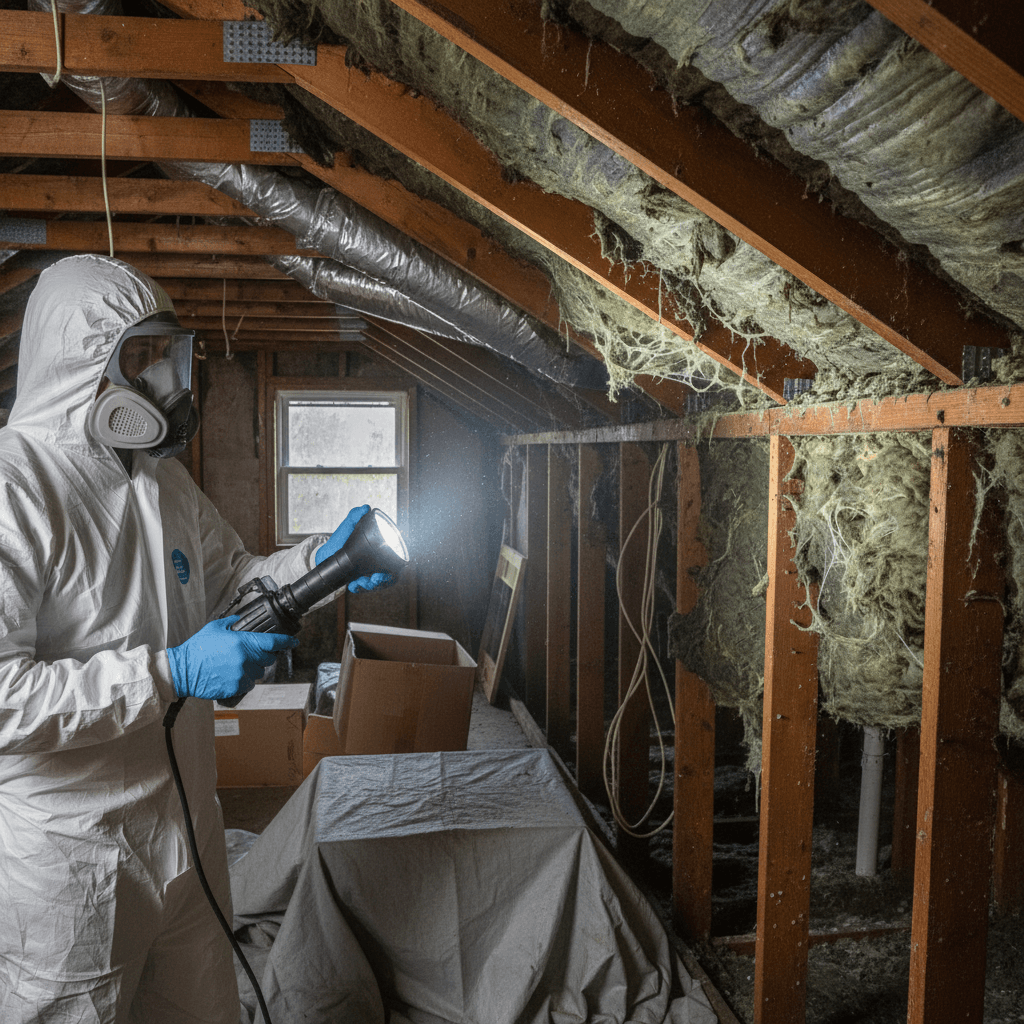
Why Bergen County Homes Are Especially Vulnerable
Bergen County sits in a humidity corridor between the Hudson River and the Ramapo Mountains. Average summer relative humidity regularly exceeds 70%, and the county's dense housing stock — much of it built between 1940 and 1980 — includes basements, crawl spaces, and attic designs that trap moisture.
This combination makes Bergen County one of the highest-risk counties in New Jersey for residential mold growth. Understanding the early warning signs can save you tens of thousands in remediation costs.
Sign 1: A Musty Smell You've Stopped Noticing
The human nose adapts to persistent odors within minutes — a phenomenon called olfactory fatigue. If guests consistently comment that your home 'smells musty' but you don't notice it anymore, that's a significant warning sign.
Mold produces microbial volatile organic compounds (MVOCs) that create the characteristic earthy, musty odor. By the time it's noticeable, the colony is usually well established behind walls or under floors.
Sign 2: Unexplained Allergies or Respiratory Issues
Bergen County has high pollen counts, so many residents attribute sneezing, congestion, and eye irritation to seasonal allergies. The key distinction: if symptoms improve dramatically when you leave the house and worsen when you return, the source may be indoor mold rather than outdoor pollen.
Children and elderly residents are particularly sensitive. If a family member has developed new asthma symptoms or recurring respiratory infections without a clear cause, request a professional mold air quality test.
- Symptoms worse at home, better away = suspect indoor source
- New asthma in a child with no prior history
- Recurring sinus infections in otherwise healthy adults
- Itchy eyes specifically in bedroom or basement
Sign 3: Warping or Buckling in Floors and Walls
Wood absorbs moisture before mold becomes visible. Hardwood floors that have developed a slight 'hump' or cupping along the boards, or drywall that feels soft when pressed, indicate prolonged moisture exposure — the same conditions mold needs to grow.
In Bergen County's older homes, this often manifests first around basement windows, under sinks, and along exterior walls in bathrooms. Don't attribute floor warping to 'old house settling' without ruling out moisture first.
Sign 4: Discoloration You're Attributing to Stains
Not all mold is black. Cladosporium (the most common indoor mold in New Jersey) is typically olive-green to brown. Penicillium is blue-green. Early-stage Stachybotrys (the infamous 'black mold') often appears as a dark gray smear.
Discoloration on grout lines, caulk around tubs, ceiling tiles, or in the corners of window frames is commonly dismissed as 'water stains' or 'dirt.' If it can't be wiped off with a dry cloth and returns after cleaning, it's likely mold.
- Olive or brown patches: likely Cladosporium
- Blue-green spots: often Penicillium
- Dark gray smears: possible early Stachybotrys
- Any discoloration that returns after cleaning
Sign 5: Condensation on Interior Walls
Visible condensation on interior walls — not just windows — indicates that the wall surface is below the dew point of the room air. This happens when insulation is inadequate or when there's a cold water pipe running inside the wall cavity.
In Bergen County homes with crawl spaces, cold air infiltration from below can create this condition on first-floor walls throughout winter and spring. The wall surface looks fine but the interior face of the drywall is repeatedly wet.
Sign 6: Your HVAC Has Never Been Cleaned
The ductwork in a Bergen County home built before 1990 has almost certainly accumulated dust, debris, and quite possibly mold colonies — especially if the system has ever had a refrigerant leak or drain pan overflow. Mold in HVAC ducts is particularly dangerous because the system distributes spores to every room simultaneously.
If you can see dark streaks radiating from your air vents on the ceiling or walls, this is mold growth being pushed out by airflow. HVAC mold remediation requires a specialist — duct cleaning alone won't eliminate an active colony.
Sign 7: A Past Water Event You Thought Was Resolved
The number one predictor of mold in Bergen County homes is a prior water damage event that was dried without professional moisture monitoring. A wet carpet that 'dried out' after a basement flood, a roof leak that was patched, a dishwasher overflow that was mopped up — all of these can leave residual moisture inside walls and subfloors that feeds mold for months.
If your home had any water event in the last 2 years that wasn't professionally dried and clearance-tested, schedule a mold inspection. It's a free assessment with Bergen Water Restore, and it will either give you peace of mind or catch a problem before it multiplies.
Need help right now?
24/7 emergency response across Bergen County. We arrive in 45 minutes or less.
Frequently Asked Questions
Everything you need to know
How much does mold remediation cost in Bergen County NJ?
Mold remediation in Bergen County typically ranges from $1,500 for a small bathroom area to $15,000+ for whole-basement or multi-room infestations. The cost depends on mold type, square footage affected, and whether structural materials need replacement. Bergen Water Restore provides free written estimates.
Do I need to leave my home during mold remediation?
For small isolated areas (under 10 sq ft), you can typically stay in unaffected rooms. For larger remediation jobs or any work involving Stachybotrys (black mold), temporary relocation is strongly recommended. Your homeowner's insurance Additional Living Expenses coverage may apply.
Is mold covered by homeowner's insurance in New Jersey?
New Jersey homeowner's insurance covers mold only when it results from a covered sudden peril (like a burst pipe). Mold from long-term neglect, gradual leaks, or flooding is typically excluded. Documentation of the originating water event is critical for coverage.
How long does mold remediation take in a Bergen County home?
A standard containment-and-removal job takes 1–3 days. Post-remediation clearance testing (required to verify the job is complete) adds 24–48 hours for lab results. Full reconstruction of affected walls and flooring follows on a separate timeline.